Why Neurodivergent People Miss Jokes (And Why It’s Not a Flaw)
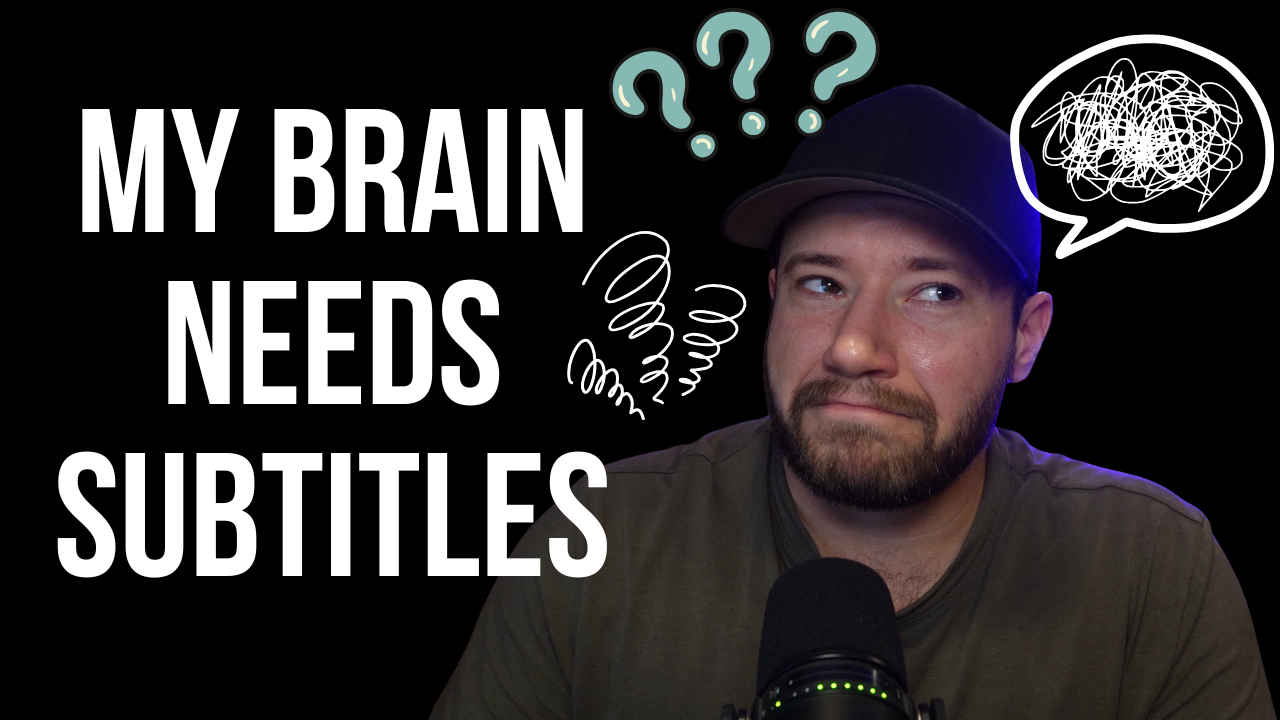
A man with a curious look into the distance is surrounded by jumbled thought bubbles, question marks with text reading “My Brain Needs Subtitles”
Have you ever caught yourself wondering, “Was that a joke? A test? A trap? An insult?” If so, welcome to the club, because many ADHD and autistic adults experience this exact social confusion on a regular basis.
Most people hear tone and instantly know whether someone is joking. Neurodivergent people often decode tone eventually… but there’s usually a delay. And sometimes that delay creates some painfully awkward or unintentionally hilarious moments, as well as some “aha” moments where it suddenly clicks hours or days later.
The Chicken Joke That Broke My Brain
Remember the classic joke: “Why did the chicken cross the road? To get to the other side.” For my entire life, I never understood why people laughed at such a painfully boring line.
Then at 37 years old, I saw a TikTok explaining the darker meaning: “the other side” literally means the afterlife — he crossed the road to get hit by a car. “Oh! The OTHER SIDE.” Facepalm moment.
And it turns out, I’m not alone. So many neurodivergent adults are realizing they’ve spent years missing the intended meanings of jokes, metaphors, sarcasm, and subtle humor.
Why Neurodivergent People Miss Jokes
This has nothing to do with intelligence. Many autistic and ADHD adults process language literally, focusing on the exact words rather than the intended subtext. Understanding sarcasm requires rapid decoding of:
Tone
Facial expressions
Social context
Shared cultural meaning
Emotional state of the speaker
Most people process these all at once. Neurodivergent brains often process them one at a time, which creates a delay. That delay means the punchline may land long after the conversation has moved on… or not at all.
When Humor Turns Into Confusion
The worst moments are when you think someone is joking — and they aren’t.
Maybe their tone sounds unserious. Maybe they’re talking about something heavy but using a delivery that feels ironic or deadpan. Meanwhile, your brain is thinking, “Ah! Dark humor. I can work with this.” So you laugh… and then their expression tells you everything you need to know.
Cue the internal meltdown.
Or maybe your ADHD spacing-out kicks in. They tell a serious story, you catch the last sentence, assume it was lighthearted, and respond with an awkward little “haha… yeah.” And instantly regret it.
These aren’t flaws. They’re processing differences.
Taking People at Their Word
Many neurodivergent people don’t just take jokes literally — we take everything literally. When someone says they’ll do something, we assume they mean it. When someone seems serious, we assume they are. And when someone is joking without showing obvious cues, the meaning gets lost.
Literal thinking can lead to misunderstandings, disappointment, and feeling like you’re living in a different social reality than everyone else.
Delayed Reactions & Asking for Clarity
Some ND folks need a few seconds (or more) to fully evaluate a joke:
What did they say? What was their tone? Is this serious? Are other people laughing? Is this sarcasm? Should I respond?
By the time the meaning clicks, the conversation may have moved on.
Others simply ask, “Are you being serious?”. Nothing wrong with that — clarity is confidence.
Feeling Left Out in Social Settings
When you miss cues or misunderstand tone:
You might be the last to laugh
Or you never laugh because you still don’t get it
You worry people think you’re humorless
You feel misunderstood or disconnected
You leave situations doubting your social skills
And that makes socializing even harder the next time.
Ways to Support Yourself (Without Becoming Someone You’re Not)
You don’t need to “fix” yourself or force humor you don’t relate to. But you can make social environments more manageable.
1. Read the room before engaging
Before diving into conversation, take a moment to observe:
Are people being light and jokey?
Or is the vibe serious?
Are people using sarcasm or dark humor?
Does this feel like a place where you need to tread carefully?
Context clues go a long way.
2. Ask for clarity when needed
You’re allowed to say:
“Wait, serious or joking?”
“Were you being sarcastic?”
This can actually improve relationships, not harm them.
3. Build a tiny internal “sarcasm library”
If you frequently hear certain phrases that turn out to be sarcastic, file them away. Over time, your brain recognizes patterns more easily.
4. Practice self-acceptance
This may always be a little challenging for you. That’s okay. You’re wired differently — and many ND folks have incredible senses of humor once they’re in environments where their style shines.
5. Keep your people close
The people who "get" your humor
Who don’t need sarcasm to feel witty
Who love your honesty and literal brilliance
Those are your people. Stick with them.
Funny, Weird, and Sometimes Chaotic Moments
If you’ve ever accidentally laughed at someone’s trauma story…Or spent hours trapped in a ridiculous situation because you missed all the red flags…You’re in good company.
Neurodivergent humor is unintentional, earnest, chaotic, and truly iconic.
The Takeaway
Struggling with jokes or sarcasm isn’t a flaw — it’s wiring. You don’t need to force yourself to “get” everything. You just need:
Awareness
Tools
Self-acceptance
And a sense of humor about the moments that will inevitably happen
With awareness, tools, and a little self-acceptance, you can turn confusing moments into empowering ones — and build a life that supports who you truly are.