When Your Brain Goes Offline: ADHD, Autism, and Nervous System Overload
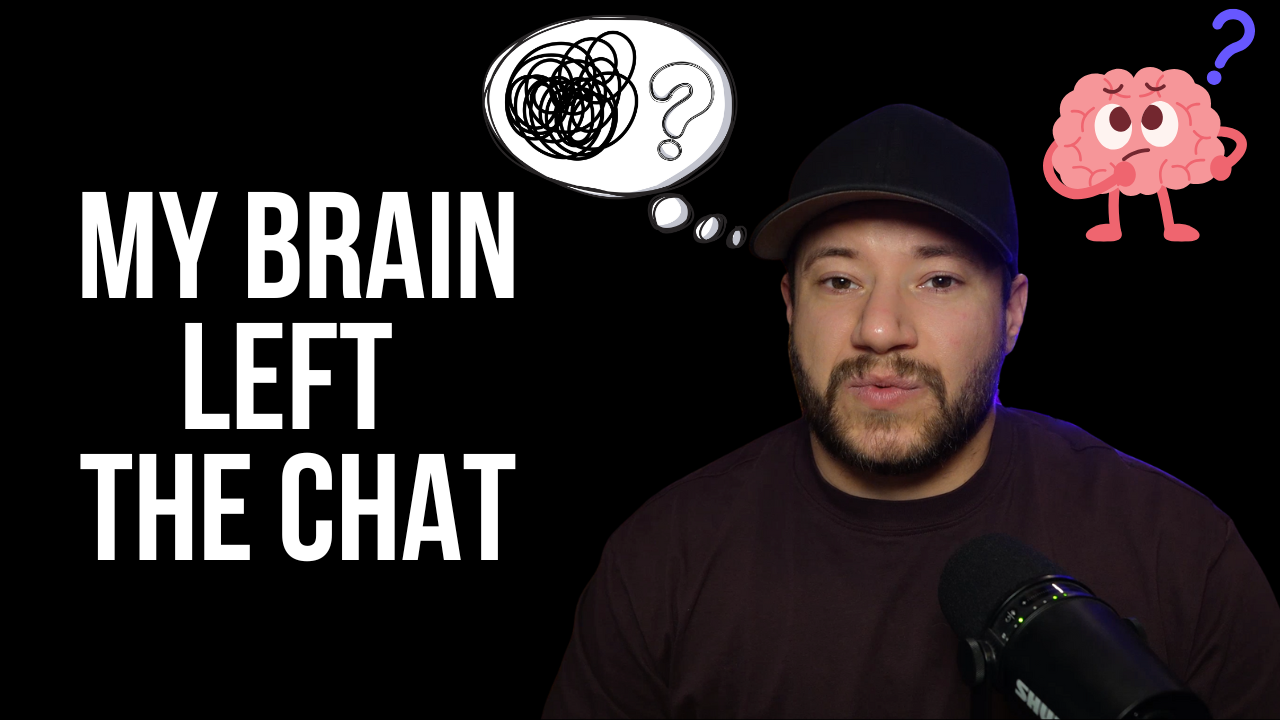
Thumbnail image showing a neurodivergent content creator speaking into a microphone against a black background, with bold text reading “My Brain Left the Chat.” A thought bubble with tangled lines and a question mark appears above their head, alongside a cartoon brain, symbolizing ADHD and autistic nervous system overload, zoning out, dissociation, and mental fatigue.
When Your Brain Goes Offline
ADHD, Autism, and Nervous System Overload
Have you ever zoned out so hard that you missed an important instruction — or completely lost the point of what someone was saying while they were saying it?
Maybe you space out at the grocery store and forget the one thing you went in for.
Maybe you walk away while filling or washing something and come back to water everywhere.
Maybe you put something in the microwave “for just a second”… and accidentally nuke it.
If you’re ADHD, autistic, or both, this probably isn’t rare. BUT, it isn’t a character flaw.
This isn’t distraction — it’s overload
For ADHD and autistic brains, checking out isn’t about not caring or not trying hard enough. It’s what happens when your brain has been on for too long with no off switch. Sometimes it’s not that you lose focus — it’s that your brain goes offline entirely.
Not because you’re broken. Because you’re overloaded.
And to make it even more frustrating, you might look like you’re still present. You’re nodding. You’re saying “yeah” at the right moments. Meanwhile, your mind left the building minutes ago.
If only it were more obvious.
The ADHD/autistic “autopilot”
That checkout mode — the dissociation, zoning out, mental fog — is often your nervous system’s protective circuit breaker.
When there’s too much stimulation, too many demands, too much noise, too many thoughts, and not enough rest, your system chooses shutdown over overload.
This can happen:
In loud public spaces
During long conversations
At social or networking events
At home when the TV is on, your phone keeps buzzing, the dog has the zoomies, and someone is talking to you at the same time
When your mind is already full, or deeply engaged, and you haven’t fully shifted to the present moment
Eventually, something has to go. And often, it’s your attention.
Why this gets misunderstood
From the outside, it can look like disinterest or disrespect. People may assume you’re not listening or don’t care — when the reality is that your nervous system is overwhelmed.
That misunderstanding can lead to shame, masking, and pushing yourself even harder… which only makes the cycle worse. Unchecked nervous system dysregulation — especially for neurodivergent people — often leads to burnout.
What burnout can look like
Burnout doesn’t always look like depression, but it can feel similar. It’s often the result of prolonged overstimulation and ignored warning signs.
Common signs include:
Chronic fatigue
Impaired focus
Forgetfulness
Decision paralysis
Difficulty initiating tasks
Feeling overwhelmed by basic daily responsibilities
Increased masking
A strong need to withdraw to recover
Neurodivergent brains burn more energy simply existing in environments not designed for them. It’s not one engine running — it’s like a dozen +!
Awareness comes first
The goal isn’t to force your brain to stay “on” all the time. It’s to notice when your system is approaching overload and intervene early. One of the most effective tools for this is regular check-ins throughout the day, especially when stress starts rising.
A simple grounding practice: the body scan
A body scan helps bring awareness back online before your system shuts down completely.
Start by:
Sitting or lying down
Taking a few slow, deep breaths
Bringing attention to your body from the toes upward
Noticing sensations without trying to fix them
Breathing into areas of tension and allowing them to soften
This slows the nervous system by narrowing your focus to one thing at a time — instead of everything at once. It might sound “woo,” but it works because it brings you back into your body instead of staying stuck in mental overdrive.
Build a reset anchor
When things are rough, short resets matter.
Depending on where you are, that might look like:
Sitting in your car for five minutes
Taking a quiet bathroom break
Turning off lights and noise
Doing a short walk
Practicing breathing or a body scan
Asking for a pause before continuing a conversation
Even five minutes can prevent a full shutdown.
Ask for what you need (this part matters)
Many neurodivergent people struggle with self-advocacy, especially autistic adults.
But it’s okay to say:
“I need five minutes before we talk.”
“Can we have this conversation later?”
“I’m overstimulated and not able to be fully present right now.”
Giving people context helps them understand that this isn’t avoidance, it’s regulation. Showing up after a reset is far more productive than forcing yourself through overload. It can totally change the trajectory of those daily challenges.
Track your patterns
Journaling can help you identify your zoning-out triggers:
When does it happen?
What’s happening around you?
How tired are you?
What’s already on your mind?
What sensory input is present?
Patterns will show you exactly where changes are needed.
Normalize it
Your brain checking out isn’t betrayal. It’s communication. It’s your nervous system saying, “I can’t do much more of this.” The more familiar you become with your patterns, the earlier you’ll notice the signs. And the earlier you intervene, the less likely you are to crash.
Next time you feel yourself drifting - Don’t push harder. Pause. Ground. Anchor.
Then ask yourself later:
What was my nervous system trying to escape from?
That’s where the answers live.